
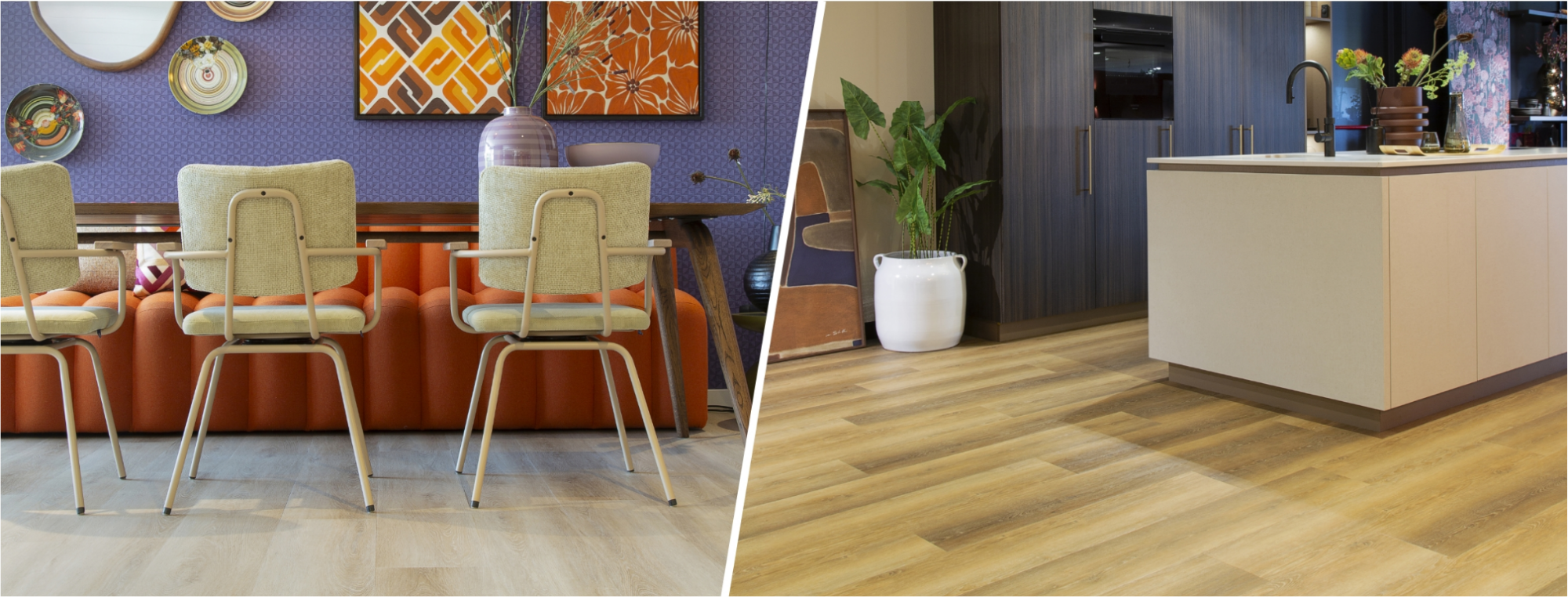
Plak & Click PVC:—which one will you choose?
You’ll often come across the terms “adhesive-backed PVC” and “click-lock PVC” when choosing a PVC floor. Although both types of flooring share many of the same benefits of PVC—such as water resistance, realistic designs, and ease of maintenance—the main difference lies in how they are installed. This determines the installation process, the feel of the floor, and sometimes its suitability for certain spaces.
Which flooring is right for your project?
Features of self-adhesive PVC
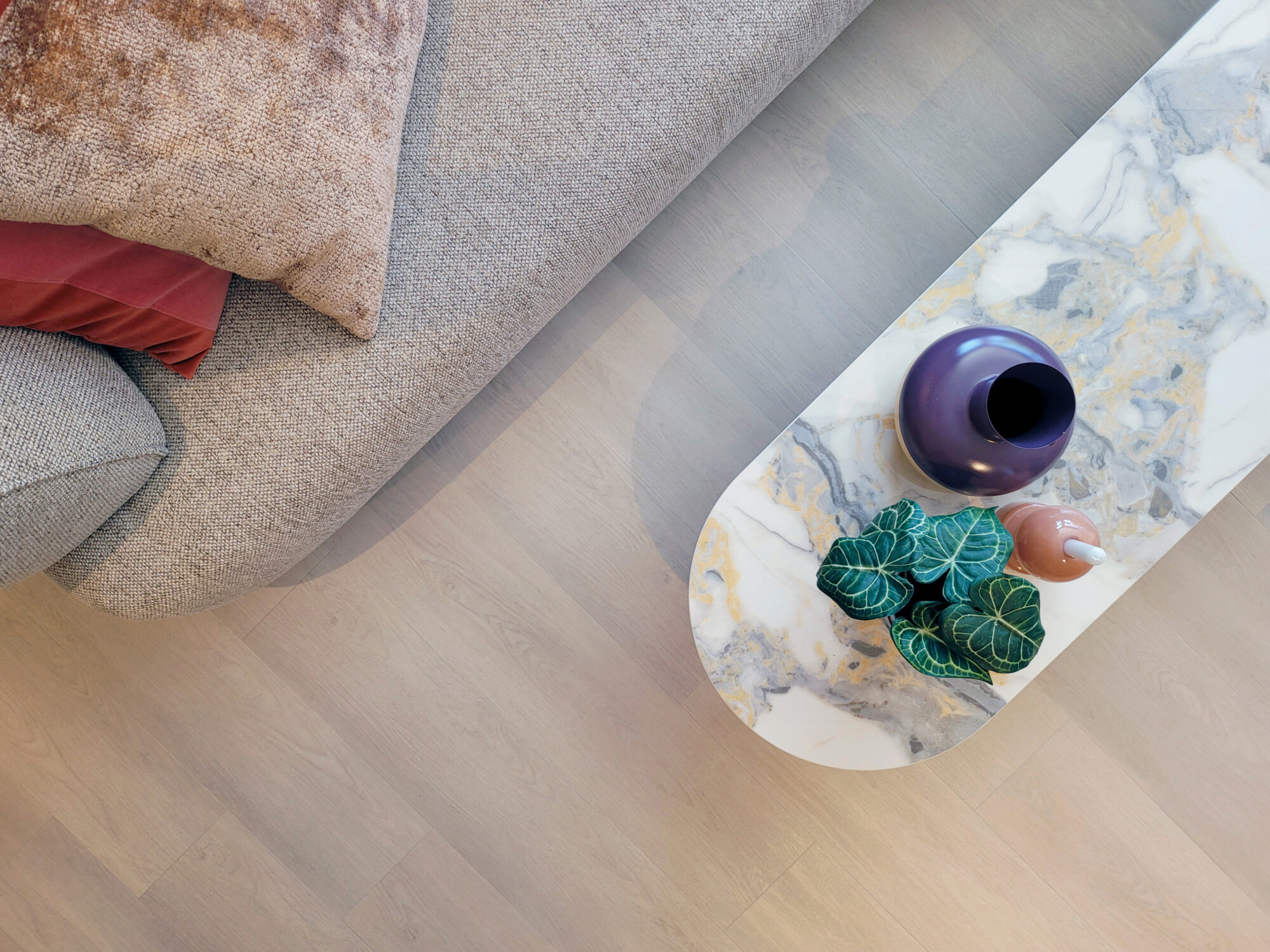
PVC sheet flooring (also known as “dryback” ) is glued directly to the subfloor. This means that the planks or tiles are attached to the floor and form a single unit with the subfloor.
Features of Adhesive-Backed PVC
Permanently installed: The flooring is adhered to the subfloor with adhesive and stays in place.
- Sleek Finish
Because the flooring is securely fastened directly to the subfloor, lying flush against it, seams and small gaps are minimized. - Leveling is required
The subfloor must be very level and clean before installation—otherwise, minor imperfections will be visible. - Professional installation recommended
Because the preparation and installation require care and experience, a professional is often hired.
PVC sheet flooring is particularly popular in areas where a sleek and permanent finish is desired, such as kitchens, bathrooms, or high-traffic areas with radiant floor heating.
Features of Click-PVC
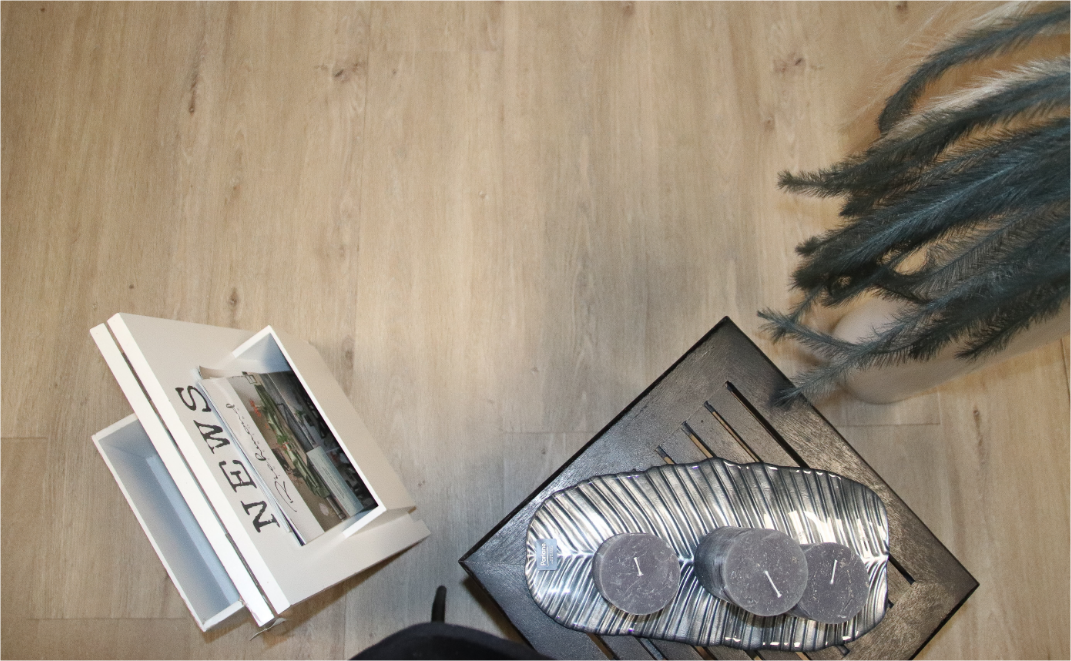
Click PVC (also known as Rigid ) consists of planks or tiles that are assembled using a click system, similar to laminate flooring. The flooring is installed as a floating floor on top of a subfloor rather than being glued down.
Features of Click PVC
- No glue required
The planks snap together, making installation easier.
Floating Floor The floor is laid loosely on a subfloor and can be removed later (for example, when moving).- Quick installation
Particularly suitable for DIYers or renovation projects where time and preparation are limited. - Subfloor
A flat subfloor is still required, but the requirements are less stringent than for self-adhesive PVC.
Click PVC is ideal for situations that require quick and flexible installation, such as in living rooms, bedrooms, or projects where future removal may be necessary.

Which floor should you choose?
The choice often depends on usage, installation requirements, and personal preference:
Are you looking for a durable, very sleek floor?
Adhesive-backed PVC is often the best option, provided the subfloor is perfectly level and you opt for professional installation.
Do you want to install it quickly, flexibly, and possibly on your own?
Click PVC offers convenience and flexibility, especially for renovations or when moving.
Is underfloor heating required?
Both systems work very well with underfloor heating; in some cases, adhesive-backed PVC may conduct heat slightly more efficiently, but modern click-lock PVC with a good subfloor performs almost identically.
Are you looking for flooring for heavy-duty use and commercial spaces?
Adhesive-backed PVC often has an advantage in terms of stability; however, click PVC can perform just as well if the right quality of flooring and subfloor are chosen.
The difference between adhesive-backed PVC and click-lock PVC lies primarily in the installation method and the preparations involved. Both types offer the benefits PVC is known for—such as water resistance, ease of maintenance, and a realistic appearance—but have specific characteristics that make them more suitable for certain applications.
When making the right choice, it is therefore important to consider not only the floor’s appearance, but above all its function, installation requirements, and conditions of use.
Would you like to know which PVC option is best suited for your project? Then check out our selection at tfd-floortile.com or contact our experts for personalized advice.